 Verbamor
Spanish phrases for the doctor
- 140 phrases
- 140 real examples
- 10 topics
- 1 free PDF
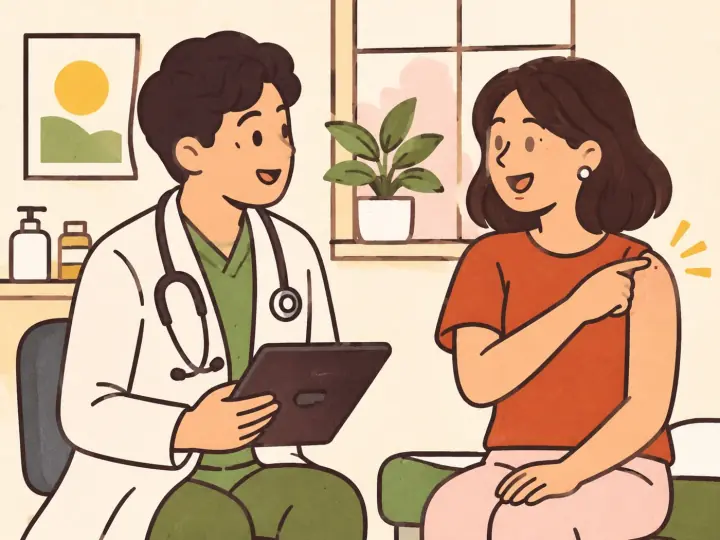
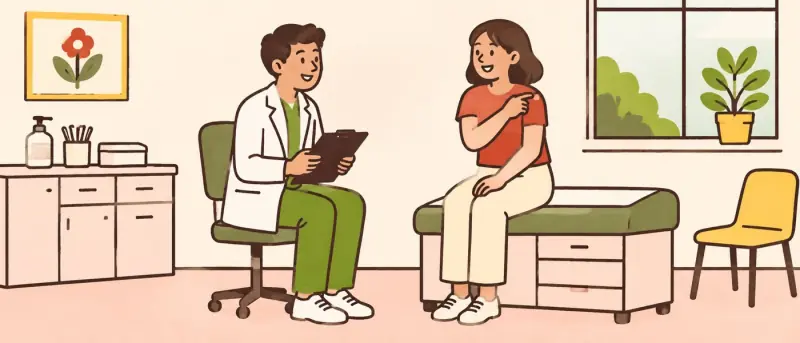
Start with "Necesito ver a un médico" (I need to see a doctor), then "Me duele aquí" (it hurts here) and point. Below are 140 phrases in the order a visit really goes, plus every question the doctor will ask you.
Your Spanish at the doctor guide is ready
Save it to your phone so it's there when you need it.
Booking an appointment 13
On the phone, on WhatsApp or at the desk.
| # | Phrase | Meaning | Example | When to use |
|---|---|---|---|---|
| 1 | Necesito ver a un médico. | I need to see a doctor. | Buenos días, necesito ver a un médico hoy, por favor. Good morning, I need to see a doctor today, please. | Everyday The one line that gets you started anywhere. |
| 2 | Quisiera pedir una cita. | I'd like to make an appointment. | Hola, quisiera pedir una cita con la doctora Ruiz. Hi, I'd like to make an appointment with Dr. Ruiz. | Formal Quisiera is the polite form. In Mexico you'll also hear sacar una cita. |
| 3 | ¿Tienen cita para hoy? | Do you have an appointment today? | ¿Tienen cita para hoy? Es bastante urgente. Do you have anything today? It's fairly urgent. | Everyday Ask this first if you feel bad. Clinics often keep a few slots for the same day. |
| 4 | ¿Atienden sin cita? | Do you see people without an appointment? | ¿Atienden sin cita o tengo que reservar? Do you take walk-ins or do I have to book? | Everyday Atender is the verb clinics use for seeing a patient. |
| 5 | Es urgente. | It's urgent. | Es urgente, mi hijo tiene mucha fiebre. It's urgent, my son has a high fever. | Everyday Say it early so they triage you. |
| 6 | ¿A qué hora puedo venir? | What time can I come? | ¿A qué hora puedo venir mañana? What time can I come tomorrow? | Everyday Times are often given in the 24-hour clock in Spain. |
| 7 | un médico general | a general doctor, a GP | Busco un médico general, no un especialista. I'm looking for a GP, not a specialist. | Everyday In Spain the family GP is el médico de cabecera. |
| 8 | el médico de cabecera | your family doctor (Spain) | Mi médico de cabecera está de vacaciones. My family doctor is on holiday. | Regional Spain. Your assigned GP at the centro de salud. |
| 9 | el centro de salud | the local health centre | ¿Dónde está el centro de salud más cercano? Where's the nearest health centre? | Everyday Public primary care in Spain. In Latin America you'll also hear clínica or consultorio. |
| 10 | un consultorio | a doctor's office | Hay un consultorio al lado de la farmacia. There's a doctor's office next to the pharmacy. | Regional Common in Mexico and Latin America, including small offices next to pharmacies. |
| 11 | ¿Hay algún médico que hable inglés? | Is there a doctor who speaks English? | Perdone, ¿hay algún médico que hable inglés? Excuse me, is there a doctor who speaks English? | Everyday Fine to ask. Private clinics in big cities often have one. |
| 12 | Quiero cancelar mi cita. | I want to cancel my appointment. | Quiero cancelar mi cita del jueves, por favor. I'd like to cancel my Thursday appointment, please. | Everyday Use cambiar mi cita to move it instead. |
| 13 | Quiero cambiar mi cita. | I want to change my appointment. | ¿Puedo cambiar mi cita para la semana que viene? Can I move my appointment to next week? | Everyday Swap in the day you want at the end. |
At the front desk 11
The desk staff ask for details before you see anyone.
| # | Phrase | Meaning | Example | When to use |
|---|---|---|---|---|
| 14 | Tengo cita a las diez. | I have an appointment at ten. | Hola, tengo cita a las diez con el doctor Gómez. Hi, I have a ten o'clock with Dr. Gómez. | Everyday Tengo cita, without una, is how people say it. |
| 15 | Es la primera vez que vengo. | It's my first time here. | Es la primera vez que vengo, ¿qué necesitan? It's my first time here, what do you need? | Everyday They'll usually hand you a form to fill in. |
| 16 | Soy turista. | I'm a tourist. | Soy turista, no tengo tarjeta sanitaria. I'm a tourist, I don't have a health card. | Everyday Tells them you'll pay or use travel insurance. |
| 17 | Tengo seguro de viaje. | I have travel insurance. | Tengo seguro de viaje, aquí está la póliza. I have travel insurance, here's the policy. | Everyday La póliza is the policy document. Keep it on your phone. |
| 18 | el seguro médico | health insurance | ¿Aceptan mi seguro médico? Do you take my health insurance? | Everyday Ask before the visit, not after. |
| 19 | la tarjeta sanitaria | the health card (Spain) | ¿Me deja su tarjeta sanitaria? Can I have your health card? | Regional Spain's public health card. The EU card is la tarjeta sanitaria europea. |
| 20 | ¿Cuánto cuesta la consulta? | How much is the visit? | Antes de entrar, ¿cuánto cuesta la consulta? Before I go in, how much is the visit? | Everyday La consulta is both the visit and the doctor's room. |
| 21 | ¿Puedo pagar con tarjeta? | Can I pay by card? | ¿Puedo pagar con tarjeta o solo en efectivo? Can I pay by card or only in cash? | Everyday Small clinics may take cash only. |
| 22 | Necesito una factura. | I need an invoice. | Necesito una factura para el seguro, por favor. I need an invoice for the insurance, please. | Everyday Your insurer will want it. Ask for un informe médico too. |
| 23 | la sala de espera | the waiting room | Puede esperar en la sala de espera. You can wait in the waiting room. | Everyday What you'll hear right after checking in. |
| 24 | Rellene este formulario. | Fill in this form. | Rellene este formulario y fírmelo abajo. Fill in this form and sign at the bottom. | Formal Spain says rellenar. Mexico and much of Latin America say llenar. |
Describing your symptoms 21
Me siento for how you feel, tengo for what you have.
| # | Phrase | Meaning | Example | When to use |
|---|---|---|---|---|
| 25 | Me siento mal. | I feel ill. | Me siento mal desde ayer por la noche. I've felt ill since last night. | Everyday The general start. Then add what's wrong. |
| 26 | Tengo fiebre. | I have a fever. | Tengo fiebre, unos treinta y ocho y medio. I have a fever, about 38.5. | Everyday Temperatures are in Celsius. 38 is a fever. |
| 27 | Tengo tos. | I have a cough. | Tengo tos seca y no me deja dormir. I have a dry cough and it won't let me sleep. | Everyday Tos seca is dry, tos con flemas is chesty. |
| 28 | Tengo gripe. | I have the flu. | Creo que tengo gripe, me duele todo. I think I have the flu, everything aches. | Everyday Mexico often says gripa for a cold or flu. |
| 29 | Estoy resfriado. | I have a cold. | Estoy resfriado y tengo la nariz tapada. I have a cold and my nose is blocked. | Everyday Use resfriada if you're a woman. Mexico also says tengo gripa. |
| 30 | Estoy mareado. | I feel dizzy. | Estoy mareado cuando me levanto. I feel dizzy when I stand up. | Everyday Mareada for a woman. Also covers feeling seasick. |
| 31 | Tengo náuseas. | I feel sick, nauseous. | Tengo náuseas después de comer. I feel sick after eating. | Everyday Ganas de vomitar is the plainer version. |
| 32 | He vomitado. | I've been sick, I've vomited. | He vomitado tres veces esta mañana. I've vomited three times this morning. | Everyday Latin America often says vomité. |
| 33 | Tengo diarrea. | I have diarrhea. | Tengo diarrea desde hace dos días. I've had diarrhea for two days. | Everyday Doctors will ask how many times a day. |
| 34 | Estoy estreñido. | I'm constipated. | Estoy estreñido desde el viaje. I've been constipated since the trip. | Everyday Careful: estoy embarazada means pregnant, and some learners mix them up. |
| 35 | No puedo respirar bien. | I can't breathe properly. | No puedo respirar bien cuando subo escaleras. I can't breathe properly when I climb stairs. | Everyday If it's sudden and bad, call emergency services. |
| 36 | Me pica. | It itches. | Me pica mucho el brazo. My arm itches a lot. | Everyday Picar works like doler: me pica el brazo. |
| 37 | Tengo un sarpullido. | I have a rash. | Tengo un sarpullido en el pecho. I have a rash on my chest. | Everyday Mexico also says ronchas for itchy bumps. |
| 38 | Estoy muy cansado. | I'm very tired. | Estoy muy cansado todo el día. I'm very tired all day. | Everyday Cansada for a woman. |
| 39 | No tengo hambre. | I have no appetite. | No tengo hambre desde hace una semana. I haven't been hungry for a week. | Everyday Doctors call it falta de apetito. |
| 40 | No duermo bien. | I'm not sleeping well. | No duermo bien y me despierto a las cuatro. I don't sleep well and I wake up at four. | Everyday Insomnio is the medical word. |
| 41 | Me corté. | I cut myself. | Me corté el dedo con un cuchillo. I cut my finger with a knife. | Everyday Me hice un corte works too. |
| 42 | Me caí. | I fell. | Me caí en la calle y me torcí el tobillo. I fell in the street and twisted my ankle. | Everyday Pair it with what hurts now. |
| 43 | Me torcí el tobillo. | I twisted my ankle. | Me torcí el tobillo jugando al fútbol. I twisted my ankle playing football. | Everyday Un esguince is the doctor's word for a sprain. |
| 44 | Creo que es una intoxicación. | I think it's food poisoning. | Creo que es una intoxicación, comí mariscos. I think it's food poisoning, I ate seafood. | Everyday Say what you ate and when. |
| 45 | Estoy embarazada. | I'm pregnant. | Estoy embarazada de cuatro meses. I'm four months pregnant. | Everyday Tell the doctor before any medicine or X-ray. |
Pain: where, how much and what kind 13
Doler works like gustar: me duele the thing that hurts.
| # | Phrase | Meaning | Example | When to use |
|---|---|---|---|---|
| 46 | Me duele aquí. | It hurts here. | Me duele aquí, cuando aprieto. It hurts here, when I press. | Everyday Point as you say it. The most useful line on this page. |
| 47 | Me duele la cabeza. | I have a headache. | Me duele la cabeza desde el lunes. I've had a headache since Monday. | Everyday Swap in any body part: me duele la espalda, la garganta. |
| 48 | Me duelen los oídos. | My ears hurt. | Me duelen los oídos después del vuelo. My ears hurt after the flight. | Everyday Plural thing, plural verb: duelen. |
| 49 | Tengo dolor de estómago. | I have a stomach ache. | Tengo dolor de estómago y no puedo comer. I have a stomach ache and can't eat. | Everyday Tengo dolor de plus the part also works. |
| 50 | Me duele la garganta. | I have a sore throat. | Me duele la garganta al tragar. My throat hurts when I swallow. | Everyday Al tragar, when swallowing, helps the doctor. |
| 51 | un dolor fuerte | a strong pain | Es un dolor fuerte, no puedo caminar. It's a strong pain, I can't walk. | Everyday Fuerte means strong, and here it means bad. |
| 52 | un dolor leve | a mild pain | Es un dolor leve, pero no se va. It's a mild pain, but it won't go away. | Everyday Leve sounds a bit formal. Poco dolor is fine too. |
| 53 | un dolor agudo | a sharp pain | Siento un dolor agudo en el costado. I feel a sharp pain in my side. | Everyday Like a stab. Punzante is close. |
| 54 | un dolor sordo | a dull ache | Es un dolor sordo en la parte baja de la espalda. It's a dull ache in my lower back. | Everyday Sordo literally means deaf. |
| 55 | Me arde. | It burns. | Me arde cuando orino. It burns when I pee. | Everyday Ardor is the noun. Common for urinary and skin pain. |
| 56 | Va y viene. | It comes and goes. | El dolor va y viene durante el día. The pain comes and goes during the day. | Everyday Doctors want to know if it's constant (constante) or not. |
| 57 | Del uno al diez, un siete. | On a scale of one to ten, a seven. | Del uno al diez, diría que un siete. From one to ten, I'd say a seven. | Everyday Answer to the pain scale question. |
| 58 | Me duele más por la noche. | It hurts more at night. | Me duele más por la noche y por la mañana. It hurts more at night and in the morning. | Everyday Say when it gets worse: al caminar, al comer. |
What the doctor asks you 19
Doctors use usted. Here is what you'll hear, and the questions are in the term column.
| # | Phrase | Meaning | Example | When to use |
|---|---|---|---|---|
| 59 | ¿Qué le pasa? | What's wrong? | Buenos días, siéntese. ¿Qué le pasa? Good morning, have a seat. What's wrong? | Formal The first question. Start with me siento or me duele. |
| 60 | ¿Desde cuándo? | Since when? | ¿Desde cuándo tiene la fiebre? How long have you had the fever? | Everyday Answer desde el lunes or desde hace tres días. |
| 61 | Desde hace tres días. | For three days. | Desde hace tres días, más o menos. For about three days. | Everyday Desde hace plus a time: two hours, a week. |
| 62 | ¿Dónde le duele? | Where does it hurt? | ¿Dónde le duele exactamente? Where exactly does it hurt? | Formal Point and say aquí. |
| 63 | ¿Cómo es el dolor? | What's the pain like? | ¿Cómo es el dolor, fuerte o leve? What's the pain like, strong or mild? | Formal Use the pain words above. |
| 64 | ¿Tiene fiebre? | Do you have a fever? | ¿Tiene fiebre o escalofríos? Do you have a fever or chills? | Formal Escalofríos are chills. |
| 65 | ¿Es alérgico a algún medicamento? | Are you allergic to any medicine? | Antes de recetarle nada, ¿es alérgico a algún medicamento? Before I prescribe anything, are you allergic to any medicine? | Formal Alérgica for a woman. Know your answer before you go. |
| 66 | ¿Toma algún medicamento? | Are you taking any medicine? | ¿Toma algún medicamento ahora mismo? Are you taking any medicine right now? | Formal Show the box or a photo of it. |
| 67 | ¿Tiene alguna enfermedad? | Do you have any illness? | ¿Tiene alguna enfermedad crónica? Do you have any chronic illness? | Formal Diabetes, asthma, high blood pressure. |
| 68 | ¿Le han operado alguna vez? | Have you ever had surgery? | ¿Le han operado alguna vez? Have you ever had an operation? | Formal Say sí, de... and the part. |
| 69 | ¿Fuma? | Do you smoke? | ¿Fuma o bebe alcohol? Do you smoke or drink? | Formal Short answers are fine: no, or un poco. |
| 70 | ¿Está embarazada? | Are you pregnant? | ¿Está embarazada o podría estarlo? Are you pregnant or could you be? | Formal A routine question before X-rays and many drugs. |
| 71 | ¿Ha comido algo raro? | Have you eaten anything unusual? | ¿Ha comido algo raro estos días? Have you eaten anything unusual lately? | Formal The food poisoning question. |
| 72 | ¿Le duele si aprieto aquí? | Does it hurt if I press here? | ¿Le duele si aprieto aquí? Does it hurt if I press here? | Formal Say sí, ahí or no, no me duele. |
| 73 | Quítese la camisa. | Take off your shirt. | Quítese la camisa y túmbese en la camilla. Take off your shirt and lie on the exam table. | Formal Túmbese in Spain, acuéstese in Latin America. |
| 74 | Respire hondo. | Breathe in deeply. | Respire hondo... y suelte el aire. Take a deep breath... and breathe out. | Formal While the doctor listens to your chest. |
| 75 | Abra la boca. | Open your mouth. | Abra la boca y diga aaa. Open your mouth and say ahh. | Formal For a throat check. |
| 76 | ¿Algo más? | Anything else? | ¿Algo más que le preocupe? Anything else worrying you? | Everyday Your chance to add a second problem. |
| 77 | ¿Tiene antecedentes familiares? | Any family history? | ¿Tiene antecedentes familiares de problemas del corazón? Any family history of heart problems? | Formal Antecedentes means history, here family medical history. |
Allergies, conditions and your own medicine 12
| # | Phrase | Meaning | Example | When to use |
|---|---|---|---|---|
| 78 | Soy alérgico a la penicilina. | I'm allergic to penicillin. | Soy alérgico a la penicilina, ojo. I'm allergic to penicillin, careful. | Everyday Alérgica for a woman. Write it on a card in your wallet too. |
| 79 | No tengo alergias. | I have no allergies. | No, no tengo alergias conocidas. No, I have no known allergies. | Everyday Conocidas means known. |
| 80 | Tengo alergia a los frutos secos. | I'm allergic to nuts. | Tengo alergia a los frutos secos y al marisco. I'm allergic to nuts and shellfish. | Everyday Tengo alergia a works for any allergy. |
| 81 | Soy diabético. | I'm diabetic. | Soy diabético tipo uno, uso insulina. I'm type 1 diabetic, I use insulin. | Everyday Diabética for a woman. |
| 82 | Tengo asma. | I have asthma. | Tengo asma y uso un inhalador. I have asthma and use an inhaler. | Everyday El inhalador, or el puff in some countries. |
| 83 | Tengo la tensión alta. | I have high blood pressure. | Tengo la tensión alta y tomo pastillas. I have high blood pressure and take pills. | Everyday Spain says tensión. Latin America says presión alta. |
| 84 | Tengo la presión alta. | I have high blood pressure (Latin America). | Tengo la presión alta desde hace años. I've had high blood pressure for years. | Regional The Latin American way to say it. |
| 85 | Tomo esta medicación. | I take this medication. | Tomo esta medicación todos los días, aquí está la caja. I take this medication every day, here's the box. | Everyday Show the box. Brand names differ by country, the active ingredient doesn't. |
| 86 | Uso lentes de contacto. | I wear contact lenses. | Uso lentes de contacto y me pica el ojo. I wear contacts and my eye itches. | Everyday Spain also says lentillas. |
| 87 | Tengo un problema de corazón. | I have a heart condition. | Tengo un problema de corazón, llevo un marcapasos. I have a heart condition, I have a pacemaker. | Everyday Say it before any test. |
| 88 | el principio activo | the active ingredient | ¿Cuál es el principio activo de esto? What's the active ingredient in this? | Formal Ask this to match a medicine from home. |
| 89 | Me vacuné contra el tétanos. | I had a tetanus shot. | Me vacuné contra el tétanos hace dos años. I had a tetanus shot two years ago. | Everyday Useful after a cut or a dog bite. |
Key words: body parts 21
Use these after me duele or tengo dolor de.
| # | Phrase | Meaning | Example | When to use |
|---|---|---|---|---|
| 90 | la cabeza | head | Me duele la cabeza. My head hurts. | Everyday Dolor de cabeza is a headache. |
| 91 | los ojos | eyes | Me arden los ojos. My eyes are burning. | Everyday One eye is el ojo. |
| 92 | el oído | ear (inner) | Me duele el oído derecho. My right ear hurts. | Everyday La oreja is the outer ear you can see. |
| 93 | la garganta | throat | Tengo la garganta irritada. My throat is irritated. | Everyday Anginas is tonsillitis in Spain. |
| 94 | el cuello | neck | No puedo mover el cuello. I can't move my neck. | Everyday Tortícolis is a stiff neck. |
| 95 | el pecho | chest | Siento presión en el pecho. I feel pressure in my chest. | Everyday Chest pressure is an emergency line. Call 112 or 911. |
| 96 | la espalda | back | Me duele la parte baja de la espalda. My lower back hurts. | Everyday Lumbago is lower back pain. |
| 97 | el estómago | stomach | Me duele el estómago después de comer. My stomach hurts after eating. | Everyday Also la barriga or la panza (casual). |
| 98 | la barriga | belly, tummy | Me duele la barriga desde anoche. My tummy has hurt since last night. | Casual Common with kids. Mexico says la panza. |
| 99 | el brazo | arm | No puedo levantar el brazo. I can't lift my arm. | Everyday Brazo izquierdo is left arm. |
| 100 | la mano | hand | Me corté la mano. I cut my hand. | Everyday La mano is feminine even though it ends in o. |
| 101 | el dedo | finger, toe | Me duele el dedo gordo del pie. My big toe hurts. | Everyday Dedo del pie for toe. |
| 102 | la muñeca | wrist | Me torcí la muñeca. I twisted my wrist. | Everyday Also means doll. |
| 103 | la pierna | leg | Tengo la pierna hinchada. My leg is swollen. | Everyday Hinchado means swollen. |
| 104 | la rodilla | knee | Me duele la rodilla al subir escaleras. My knee hurts going upstairs. | Everyday Common with hikers and runners. |
| 105 | el tobillo | ankle | Tengo el tobillo hinchado. My ankle is swollen. | Everyday Pair with me torcí. |
| 106 | el pie | foot | Me duele el pie al caminar. My foot hurts when I walk. | Everyday Los pies, plural. |
| 107 | la piel | skin | Tengo la piel roja y me pica. My skin is red and itchy. | Everyday Dermatólogo for a skin doctor. |
| 108 | los dientes | teeth | Me duelen los dientes. My teeth hurt. | Everyday A dentist is el dentista. Una muela is a back tooth. |
| 109 | el corazón | heart | Siento el corazón muy rápido. My heart feels very fast. | Everyday Palpitaciones are palpitations. |
| 110 | los pulmones | lungs | El médico me escuchó los pulmones. The doctor listened to my lungs. | Everyday Singular: el pulmón. |
Tests and the exam 9
| # | Phrase | Meaning | Example | When to use |
|---|---|---|---|---|
| 111 | un análisis de sangre | a blood test | Le voy a pedir un análisis de sangre. I'm going to order a blood test. | Everyday Mexico often says estudios de sangre. |
| 112 | un análisis de orina | a urine test | Necesitamos un análisis de orina. We need a urine test. | Everyday They'll give you un bote, a small pot. |
| 113 | una radiografía | an X-ray | Vamos a hacer una radiografía del tobillo. We'll X-ray your ankle. | Everyday Say if you're pregnant first. |
| 114 | una ecografía | an ultrasound | Le haremos una ecografía del abdomen. We'll do an abdominal ultrasound. | Everyday Mexico says ultrasonido. |
| 115 | en ayunas | fasting, on an empty stomach | Venga en ayunas para el análisis. Come fasting for the test. | Formal No food from the night before. Ask if water is OK. |
| 116 | los resultados | the results | ¿Cuándo tendré los resultados? When will I have the results? | Everyday Ask how you'll get them: online, by phone or in person. |
| 117 | Le voy a tomar la tensión. | I'm going to take your blood pressure. | Siéntese, le voy a tomar la tensión. Sit down, I'll take your blood pressure. | Formal Latin America: tomar la presión. |
| 118 | Le voy a poner una inyección. | I'm going to give you an injection. | Le voy a poner una inyección para el dolor. I'll give you a shot for the pain. | Formal Mexico says una inyección or un piquete. |
| 119 | unos puntos | stitches | Necesita unos puntos en el corte. The cut needs a few stitches. | Everyday Quitar los puntos is to take them out. |
The diagnosis and what to do 13
Ask the doctor to repeat or write it down. They are used to it.
| # | Phrase | Meaning | Example | When to use |
|---|---|---|---|---|
| 120 | ¿Qué tengo? | What do I have? | Doctor, ¿qué tengo? ¿Es grave? Doctor, what do I have? Is it serious? | Everyday The direct question. Perfectly normal to ask. |
| 121 | ¿Es grave? | Is it serious? | ¿Es grave o se cura solo? Is it serious or will it heal on its own? | Everyday Grave means serious, nothing to do with graves. |
| 122 | No es nada grave. | It's nothing serious. | Tranquilo, no es nada grave. Don't worry, it's nothing serious. | Everyday The line you hope to hear. |
| 123 | Es una infección. | It's an infection. | Es una infección de garganta. It's a throat infection. | Everyday Viral or bacterial: vírica or bacteriana. |
| 124 | Le voy a recetar... | I'll prescribe you... | Le voy a recetar un antibiótico. I'll prescribe you an antibiotic. | Formal Recetar is to prescribe. |
| 125 | Haga reposo. | Rest. | Haga reposo dos o tres días. Rest for two or three days. | Formal Reposo is medical rest, at home. |
| 126 | Beba mucha agua. | Drink plenty of water. | Beba mucha agua y coma ligero. Drink plenty of water and eat light. | Formal Mexico and others say tome mucha agua. |
| 127 | Si empeora, vuelva. | If it gets worse, come back. | Si empeora o sigue la fiebre, vuelva. If it gets worse or the fever stays, come back. | Formal Empeorar is to get worse. |
| 128 | Vaya a urgencias. | Go to the emergency room. | Si le cuesta respirar, vaya a urgencias. If you struggle to breathe, go to the ER. | Formal Urgencias is the ER in Spain and Mexico. |
| 129 | ¿Puede repetirlo más despacio? | Can you say it again more slowly? | Perdone, ¿puede repetirlo más despacio? Sorry, can you say it again more slowly? | Everyday Use it as often as you need. |
| 130 | ¿Me lo puede escribir? | Can you write it down for me? | ¿Me lo puede escribir, por favor? Can you write it down for me, please? | Everyday Then you can translate it calmly later. |
| 131 | Necesito un justificante. | I need a doctor's note. | Necesito un justificante para el trabajo. I need a note for work. | Everyday Spain says justificante. Mexico says una constancia médica. |
| 132 | un informe médico | a medical report | ¿Me puede dar un informe médico para mi seguro? Can you give me a medical report for my insurer? | Formal Travel insurers usually ask for one. |
Prescription and pharmacy 8
| # | Phrase | Meaning | Example | When to use |
|---|---|---|---|---|
| 133 | la receta | the prescription | Aquí tiene la receta. Llévela a la farmacia. Here's your prescription. Take it to the pharmacy. | Everyday Also means recipe. |
| 134 | Tome una pastilla cada ocho horas. | Take one pill every eight hours. | Tome una pastilla cada ocho horas durante cinco días. Take one pill every eight hours for five days. | Formal Cada ocho horas is the most common schedule you'll hear. |
| 135 | con las comidas | with meals | Tómelo con las comidas, no en ayunas. Take it with food, not on an empty stomach. | Formal Antes de comer is before meals. |
| 136 | Termine el tratamiento. | Finish the course. | Aunque se sienta mejor, termine el tratamiento. Even if you feel better, finish the course. | Formal Said about antibiotics. |
| 137 | el jarabe | syrup | Le doy un jarabe para la tos. I'll give you a cough syrup. | Everyday Una cucharada is a spoonful. |
| 138 | la pomada | cream, ointment | Póngase esta pomada dos veces al día. Put this cream on twice a day. | Everyday Also la crema. |
| 139 | los efectos secundarios | side effects | ¿Tiene efectos secundarios? Does it have side effects? | Everyday Ask if it makes you sleepy: ¿da sueño? |
| 140 | ¿Lo cubre el seguro? | Does insurance cover it? | ¿Lo cubre el seguro o lo pago yo? Does insurance cover it or do I pay? | Everyday Keep every receipt. |
Your Spanish at the doctor guide is ready
Save it to your phone so it's there when you need it.
Good to know
Doler works backwards
You say me duele la cabeza, literally the head hurts me. For two or more things, use duelen: me duelen los pies. Get this one verb right and half the visit is done.
Expect usted
Doctors and desk staff talk to you as usted. So you'll hear ¿Qué le pasa? and Tome una pastilla. Answer with plain yo sentences and you'll be fine.
Carry your list in Spanish
Write your allergies, conditions and medicines in Spanish on your phone before you travel. Use the active ingredient, since brand names change by country.
Spain and Latin America differ a little
Spain says tensión, rellenar and médico de cabecera. Mexico says presión, llenar and consultorio. Both sides understand each other.
In an emergency, skip the clinic
Chest pain, trouble breathing or heavy bleeding means urgencias or a call. That's 112 in Spain and 911 in Mexico and many Latin American countries.
Questions people ask
How do I say "I need a doctor" in Spanish?
Necesito un médico, or Necesito ver a un médico. If it's serious, add es urgente.
How do I say what hurts in Spanish?
Use me duele plus the body part: me duele la espalda. For plural parts use me duelen: me duelen los oídos.
What questions will a Spanish-speaking doctor ask me?
Usually what's wrong (¿Qué le pasa?), since when (¿Desde cuándo?), where it hurts, if you have allergies and what medicine you take. Each one is in the table above.
Is it médico or doctor?
Both. Médico is the job. Doctor or doctora is how you address them: Gracias, doctora.
How do I say I'm allergic to something?
Soy alérgico a la penicilina, or alérgica for a woman. Tengo alergia a... also works for anything.
What is a médico de cabecera?
It's your assigned family doctor in Spain's public system, based at your local centro de salud.
Keep going
- Spanish emergency phrases
- Spanish for the pharmacy in Mexico
- French phrases for the doctor
- Spanish for your NIE appointment
- Spanish phrases for the hotel
- Phrase kits for real situations
More travel phrase kits
- Pharmacy Spanish for Mexico
- Renting Spanish for Mexico City
- Lisbon rental Portuguese
- Restaurant Spanish
- French for restaurants and cafés
- Italian coffee bar phrases
- Italian for travel
- Portuguese for travel
- Russian for travel
- French at the doctor
- Spanish for emergencies
- French for emergencies
- Portuguese bank account phrases
- French for the préfecture
- Spanish for the NIE and TIE
- Taxi and Uber Spanish
- Hotel and Airbnb Spanish
- Airport Spanish
- Border and immigration Spanish
Sources
Want these to stick? Verbamor turns any phrase on this page into a flashcard with a native voice, so it comes back right before you'd forget it.
More free tools
All 18-
Word patterns in 6 languages Understand and say whole groups of words from a few dozen simple rules. Spanish, French, Italian, Portuguese, Russian and German, each with a free PDF.
-
Slang for 20 Latin American countries 300 local phrases for each country, from Mexico to Brazil, with real examples, English translations and when to use each one.
-
How many Spanish words do you know? Tick the words you know from a frequency-banded sample. Fake words catch the guessing.
-
How much of a text do you already know? Paste any text and see what share of it sits inside the first 1,000 to 5,000 words.
-
The forgetting curve, drawn properly Put in the days since your last review and see how much of a word is left, on the real FSRS-6 curve.
-
What do 20 new cards a day cost you? Project your daily reviews for two years from a new-card rate and a retention target.
-
Cognate checker Type an English word, see its likely relatives in five languages, and get warned about false friends.
-
Der, die or das? Type a German noun and get its likely article, with the ending or compound rule behind it.
-
What a tutored word really costs Your lesson price divided by the words you still have next week, with the arithmetic in full.
-
Count the hours a term abroad buys The hours a semester abroad really adds, next to what the same money buys in tutoring.
-
Texting codes in 5 languages What mdr, tqm, kkkk, cmq and спс mean, with real chats, how to reply and a free decoder PDF for each language.
-
Terms of endearment in 5 languages What to call your partner, your kids and your friends in Spanish, French, Italian, Russian and Portuguese, with how each one sounds.
-
Same language, different country Spain vs Mexico, Brazil vs Portugal, Quebec vs France: the words that change and the ones that get you in trouble.
-
False friends in 5 languages Words that look like English and mean something else, from embarazada to préservatif, with the word you really want.
-
How people really talk The short forms, dropped sounds and accents that make fast speech hard to follow, written out so you can hear them.
-
Phrases for your partner's family What to say to your in-laws and your grandparents: first visits, meals, holidays and the questions they will ask.
-
Spanish slang translator Look up 6,000+ slang words and phrases from 20 countries, Spanish to English or English to Spanish.
- All 18 free tools Every tool on one page, plus the free debrief sheet.