 Verbamor
Who's behind this
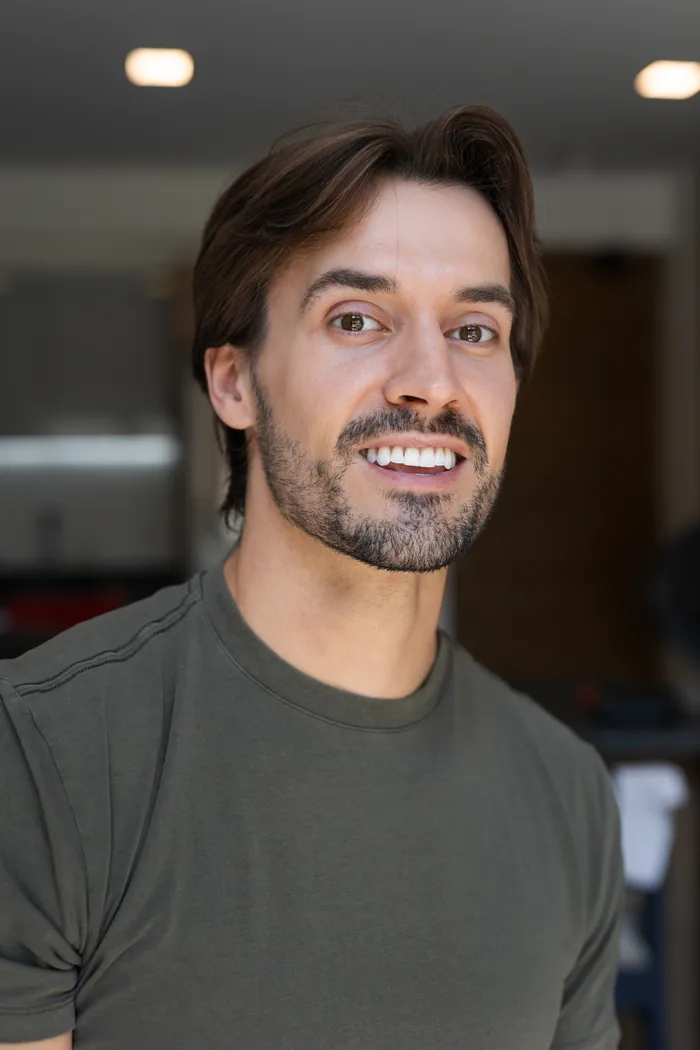
Verbamor is built by Colin Taylor. One person writes the app, the research page, and every post on this blog.
Two people, if you count my co-founder Claude. It works nights, has never once asked about equity, and has strong opinions about my commit messages.
It started in South America. It's my favorite place in the world, and the reason is the people. You can say hello to a stranger on the street there and end up in an actual conversation.
I didn't have a car, so I walked everywhere. That's a lot of hellos.
I'm an extrovert. Getting the greeting right and then stalling out was never going to satisfy me, so I got serious about Spanish and Portuguese. 2 lessons a week on iTalki, for a while.
Then it got personal. I'm dating someone whose parents and family speak only Spanish, and if I wanted to know them I had to be able to hold a real conversation at their table.
Streaks stop mattering pretty fast when the person across from you is your girlfriend's mother.
My tutor taught me good material. By the next lesson most of it was gone, and building flashcards by hand turned out to be a second job I never kept up with. So I built the thing that does it for me.
I'm not taking 2 lessons a week anymore. I have conversations in Spanish and record them on my phone, and anywhere I reached for a word I didn't have, that word goes into my deck. Her family runs a business, so I can ask Verbamor for vocabulary on that topic and it builds the cards. I show up already knowing how to talk about the thing they spend their lives on, and our conversations got deeper because of it. That's the whole return on this project as far as I'm concerned.
Friends and family kept asking me for it. A lot of people I know want to learn a language and keep bouncing off Duolingo, because the words it teaches have nothing to do with their lives. So Verbamor seeds your deck with 650 high-frequency base words on day one, then fills the rest with vocabulary pulled from your own lessons and conversations. You get a floor to stand on and then the words you'll actually use.
What the app actually does
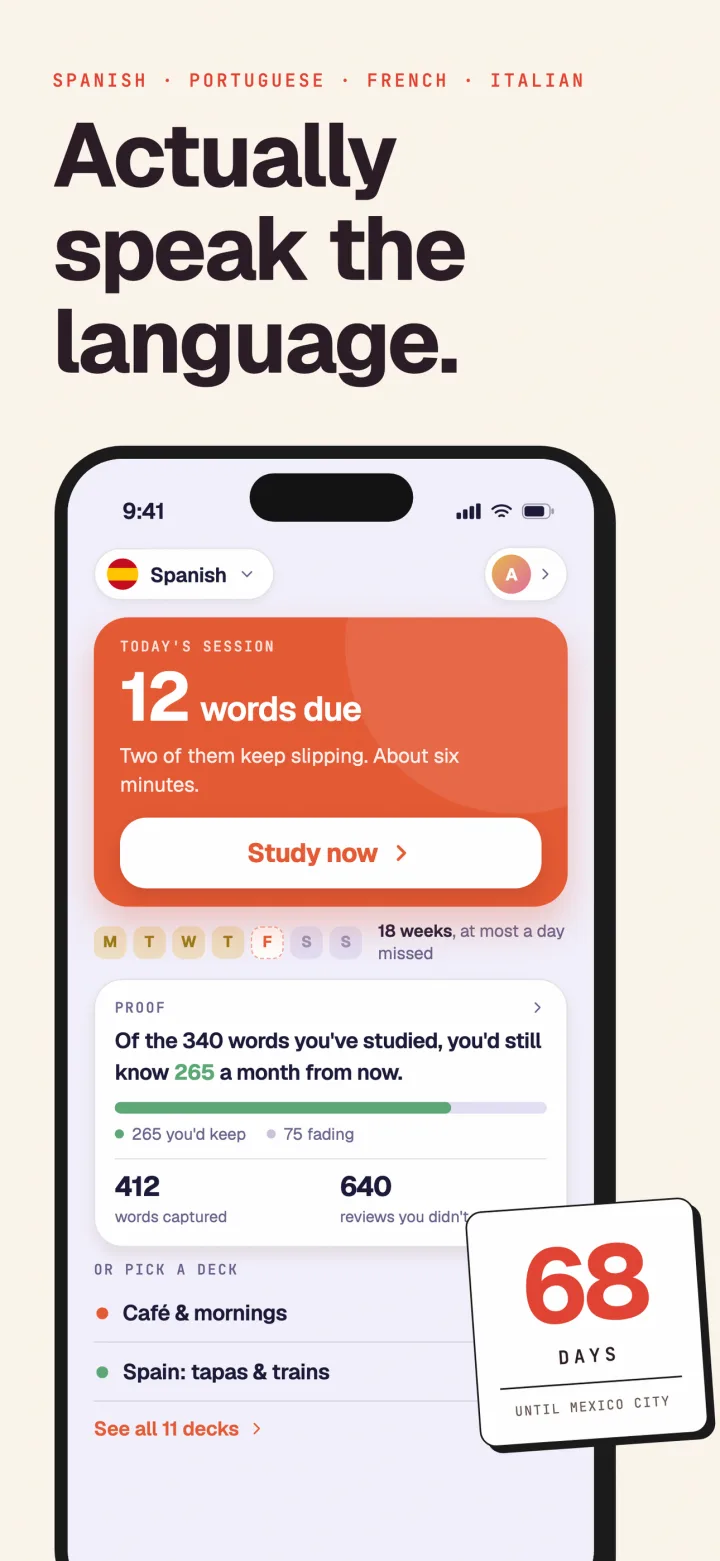
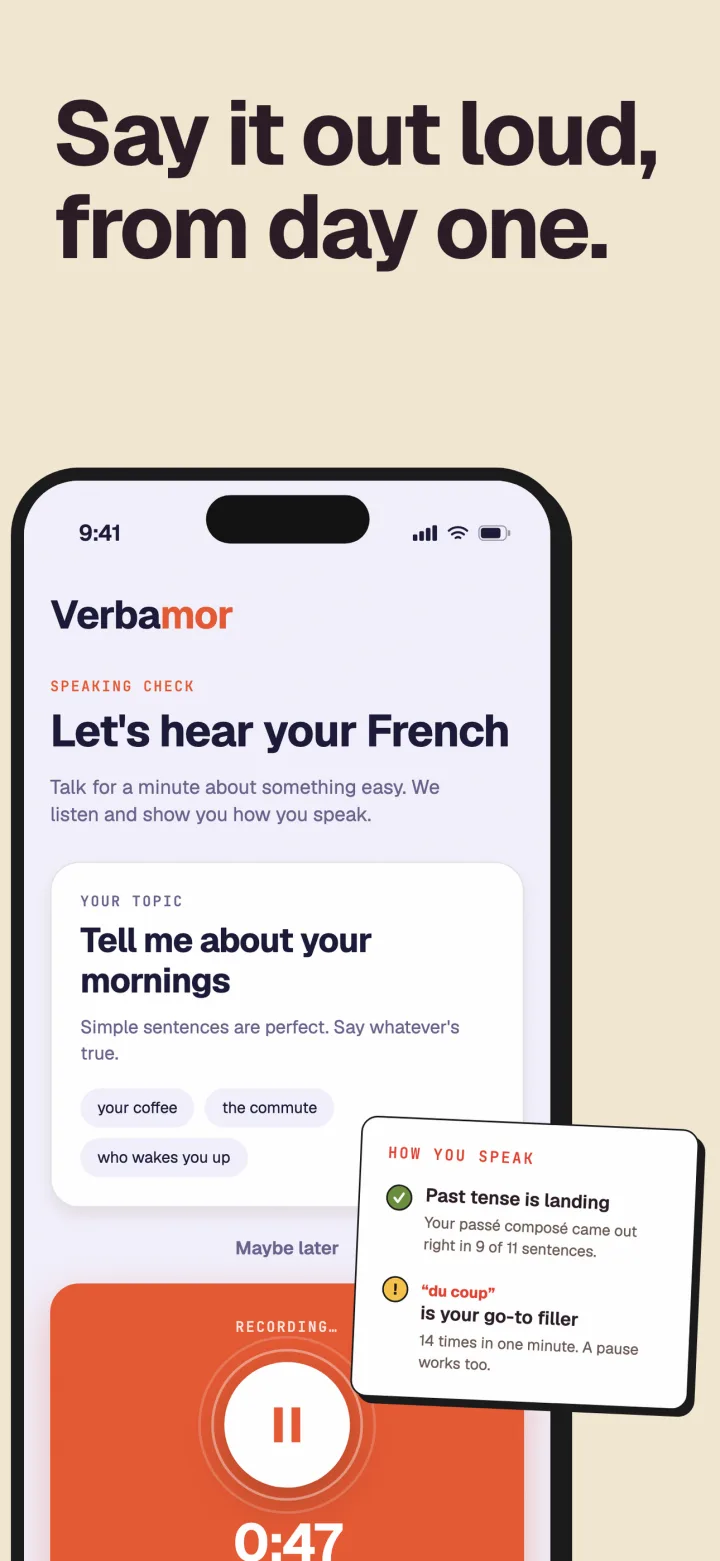
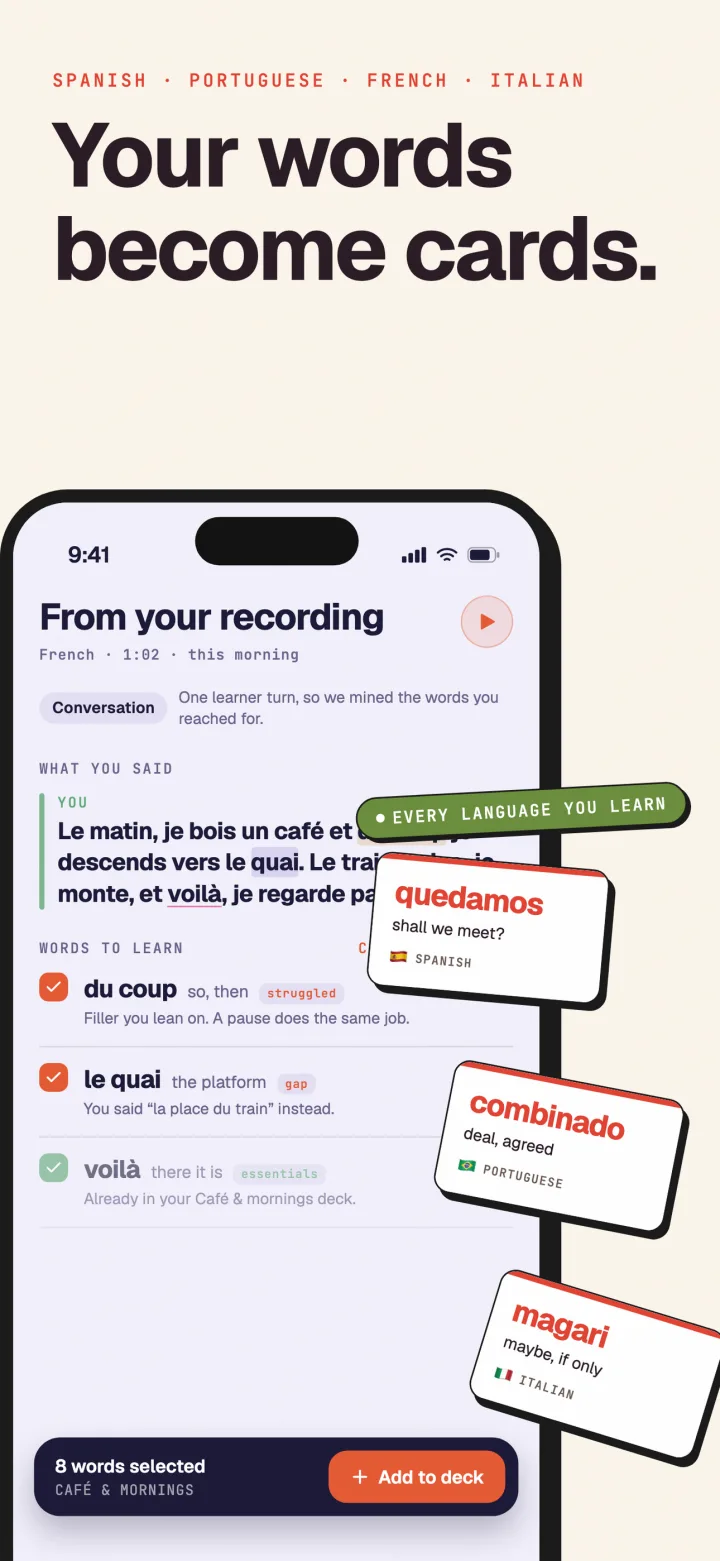
You record a lesson. Verbamor transcribes it, finds the words and phrases your tutor actually taught you, and turns them into flashcards with native audio and an image on each one. Then it schedules the reviews with FSRS, the open-source algorithm that models how fast you personally forget.
It's the memory layer for lessons you're already paying for. It doesn't replace a tutor and doesn't try to.
What it looks like
Three screens from the App Store listing. The app itself is in English, and it teaches Spanish, French, Italian, Portuguese and Russian.
How I source what I write
Every load-bearing claim on this site is traced to published research on the research page, with links. Not "studies show." The actual paper, the actual authors, the actual number.
Three rules I hold myself to on the blog:
- If I cite a study, I link it, and I've read past the abstract.
- If the evidence is thin or contested, I say so in the post rather than rounding it up to a certainty.
- If something is my opinion or my own experience, it's marked as mine, not dressed up as a finding.
When I get something wrong, I fix the post and the modified date changes. I don't quietly delete things.
What I write about
Memory research, and how to apply it if you're learning a language with a tutor. Spacing, retrieval practice, sleep and consolidation, choosing a tutor, building a study environment, using TV and books as input. The blog is here, and there's an RSS feed if you'd rather not rely on an algorithm to show it to you.
Reaching me
Support, bugs, and "you got this wrong": support@verbamor.com. It comes to me.
Built for my own lessons first.
Record a lesson, get the deck, keep the words. The annual plan starts with a 7-day free trial, and you can cancel anytime.
Start 7 days free